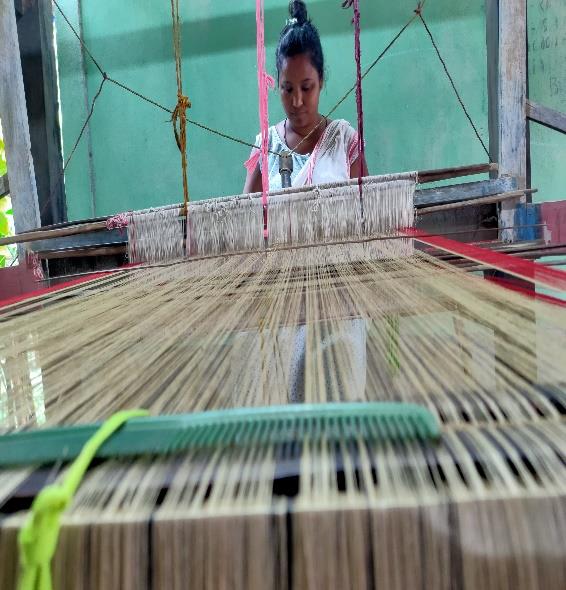
In the village of Hahara under Dimoria Block of Assam, a remarkable journey of transformation has emerged through the dedication and determination of women artisans. The Kanaklata 1 Self-Help Group (SHG), established in 2010, has become a powerful example of how traditional handloom skills can create sustainable livelihoods and bring meaningful social change. Supported by Swabalami Handloom & Handicraft Development Co-operative Society Ltd. and Creative, a Society for Rural Economic Development, the group was formed with a mission to empower women economically through handloom crafts and Eri silk production.
The journey began with ten women from a small rural community who shared a common dream of improving their lives and preserving Assam's rich handloom heritage. Despite possessing determination and traditional knowledge, they faced severe challenges. Most members depended on small-scale agriculture and daily wage work, which provided irregular and insufficient income. Limited technical knowledge, inadequate infrastructure, lack of market access, and prevailing social and gender barriers further restricted their opportunities for growth and economic independence.
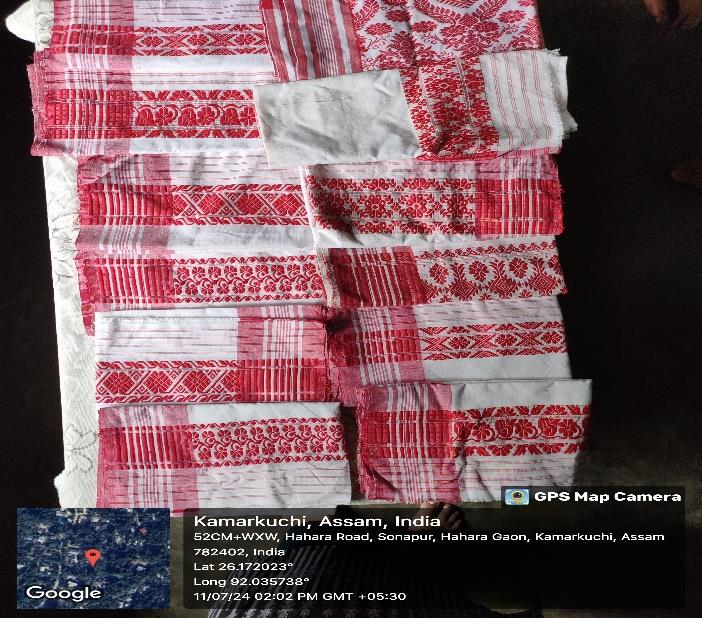
The turning point came with the implementation of the SFURTI (Scheme of Fund for Regeneration of Traditional Industries) project facilitated by Creative NGO. Through this initiative, the women received extensive training in Eri silk spinning, weaving, dyeing techniques, entrepreneurship, and business management. Workshops and practical sessions strengthened their skills and introduced them to modern production methods. They were also provided with essential resources such as spinning wheels, looms, and raw materials that significantly improved their productivity and product quality.
The SHG gradually evolved from producing basic handloom products to creating a wide variety of attractive and high-quality items. Access to exhibitions, fairs, and online platforms enabled them to reach wider markets and establish stronger customer connections. The group's products gained recognition and generated better income opportunities. The establishment of a Common Facility Centre (CFC) equipped with modern tools further strengthened their production capabilities.
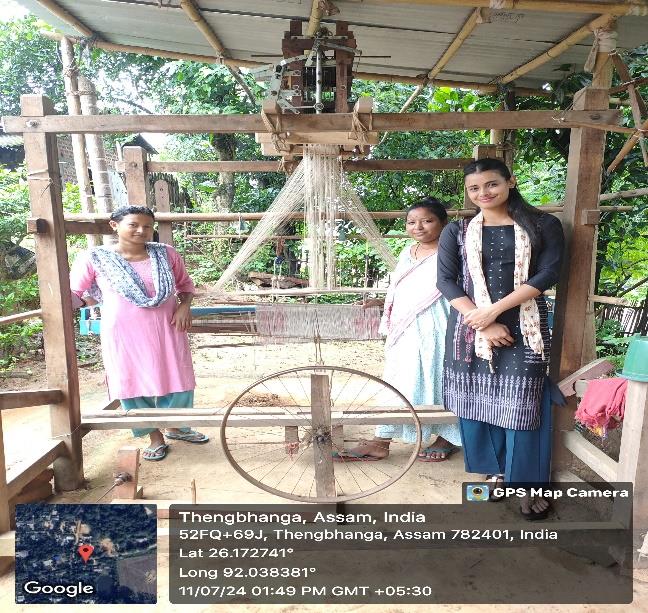
Among the many inspiring stories within the SHG, the journey of its President, Mrs. Archana Medhi, stands out as a symbol of perseverance and growth. She initially started weaving simple products such as Gamosa and Mekhela Chador. With continuous support, training, and access to broader markets, she expanded her skills and began producing more intricate handloom products including woollen shawls and traditional textiles. Her commitment to quality and innovation earned appreciation from customers and significantly improved her financial stability and confidence.
Mrs. Archana also shared a powerful experience that reflects the social transformation brought by the initiative. In the beginning, many women from nearby villages mocked the SHG members and doubted the value of training and workshops conducted under the SFURTI project. However, as the women became financially independent and demonstrated visible improvements in their lives, attitudes changed completely. Those who once doubted them are now inspired by their achievements and wish to follow their path.
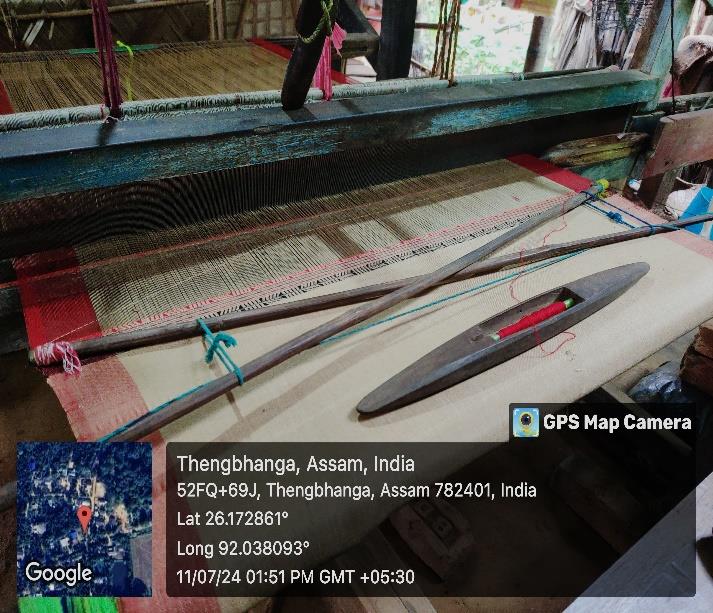
The impact of Kanaklata 1 SHG extends beyond economic growth. Women who once had little participation in household and community decisions now actively contribute as leaders and decision-makers. Increased income has improved education opportunities for children, access to healthcare, and living standards for their families. The SHG has also promoted environmentally responsible practices through natural dyes and sustainable production methods.